CASE STUDY · MY OWN PROJECT · JUNE 2025 – AUGUST 2026
28 pages. 761,000 impressions.
I bought this domain, put a single page on it, and then forgot about it. Months later I opened Search Console out of curiosity — and found that Google had discovered that one page by itself. People were searching for it. I hadn't done anything.
That was the moment a forgotten domain turned into an experiment.
About a 9-minute read · All figures from Google Search Console, August 2026
Contents
How it started
There is a version of this story where I had a strategy. It would be a lie.
I bought a domain because I liked the subject. Then I published one page on it — a few paragraphs, nothing more — and left it alone. No plan, no keyword research, no content calendar. One page sitting on the internet that nobody linked to.
Months later I opened Search Console out of pure curiosity. And there they were: impressions. Not many, but real ones. Google had found that single page, indexed it, and was showing it to people searching for something I had never consciously optimised for.
I had done nothing right. But something on that one page answered a question people were actually asking — and Google had noticed it before I did.
That changed how I see the work. I had spent fifteen years doing SEO the usual way round: research keywords, plan content, publish, hope. Here it ran backwards. The demand was already there. It was sitting in the queries report with numbers next to it, waiting for someone to look.
So I decided to run this website as an experiment, with one rule: I publish nothing unless the data has already given me a reason.
Why I did it at all
Honestly: because I had the time.
I moved to Germany with my family in 2023. Before that I had run my own SEO agency for nine years, with clients in the US, UK, Canada and Germany. In Germany I started again from zero: a new language, an integration course, a CV nobody here could place, and no local references.
Anyone starting over in a new country knows the loop: no references, no work; no work, no references. And nobody hands a stranger their website to practise on.
So I practised on the only website I could ask: my own.
No client, no budget, no team, no approval rounds. In exchange, complete freedom to try things you would never try on a paying client's site — deleting pages, for instance. And every number that came out of it is mine, and still verifiable today.
So this isn't a success story about an agency with a budget. It's a case study about what fourteen months of patience and one free Google tool can do.
Fourteen months in five phases
Looking back, the project splits into five clear stages. The most important one is the stage where nothing appeared to happen.
What happened
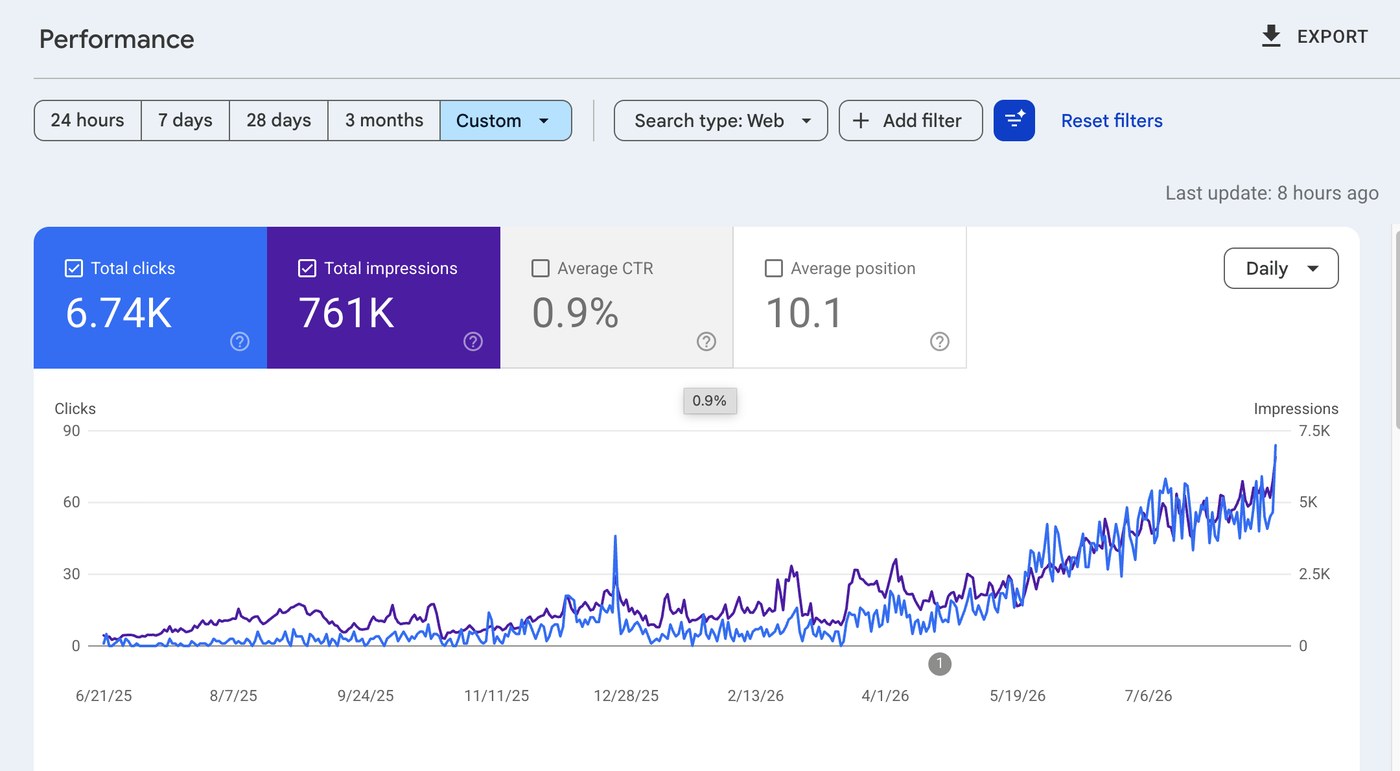
The curve tells the story more honestly than any summary. From June 2025 to roughly March 2026, almost nothing moves. A client would probably have cancelled during that stretch, and I couldn't have blamed them — on screen it looked like nothing.
In reality, everything that worked later was built in exactly those months: pages merged, titles rewritten, the technical floor cleaned up, the structure straightened out. From May 2026 the curve climbs — not because more was published, but because what already existed finally matched the questions people were really asking.
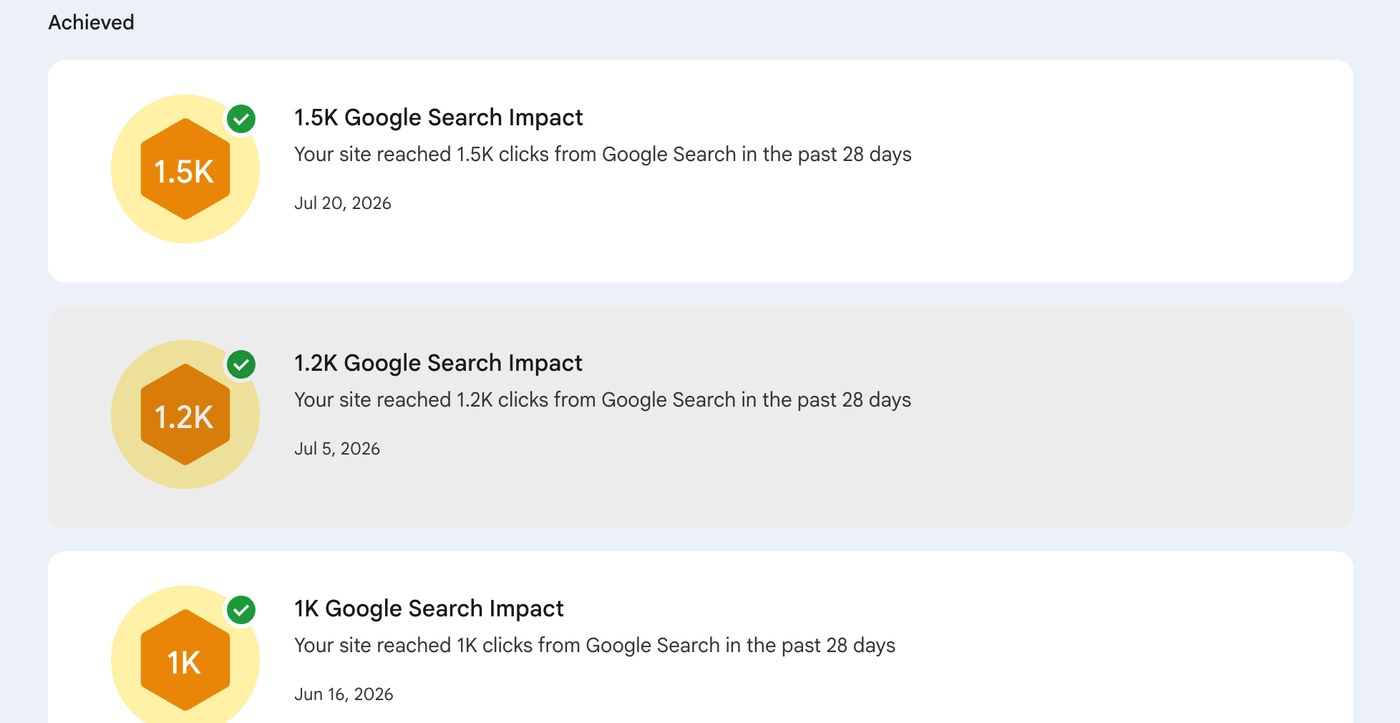
Those three milestones are my favourite part, because they show growth doesn't have to come from new content. In those 34 days nothing was published. Titles were sharpened, internal links were added, and two weak pages were merged into one strong one.
+198 clicks
+133% on a single page. The page already existed — it just had the wrong title.
+1,000%
on a different page. In absolute terms: +20 clicks. Both numbers are true. Only one of them is useful.
17 → 28 pages
Eleven new pages in fourteen months — fewer than one a month, and every one from a query that already had impressions.
The method: six steps, every week
None of this is secret and none of it is clever. It's just uncomfortable, because it asks for patience instead of activity.
Measure before you have an opinion
Same first move every week: open the queries report, last 28 days, sort by impressions descending. Not clicks — impressions. Clicks show what already works. Impressions show what could work.
Let the queries decide what gets built next
The report contains terms the site gets impressions for even though no page on it actually addresses them. Google serves up something half-relevant instead. That isn't keyword research — it's a list of questions real people have already asked, with real numbers beside them. All eleven new pages in this project came from that list. Not one came out of my head.
Delete and merge, don't only add
A page that collects impressions for months and produces zero clicks is not answering the question it's being served for. Merging two weak pages into one good one moved more in this project than any new page did. Deleting your own work feels wrong. It's still right.
One page per question — not one page per keyword
Build ten pages for ten similar terms and you end up competing with yourself. One page that answers a question completely beats five thin ones circling it. For AI answers this matters twice over: models cite the page that contains the answer, not the page that repeats the keyword most often.
Write titles for the question, not the keyword
The page with +198 clicks is not new. It got a new title — phrased the way people actually type the question, not the way a tool spells the keyword. That was the entire change. No new text, no links, no budget.
Date everything and write it down
What changed, when, and why. Without that log, every rise is just a story you tell yourself afterwards. With it, it's a cause you can repeat — on the next site, for the next client.
The second half: AI answers
Since May 2026 Search Console reports impressions from generative AI features separately. That number surprised me more than anything else in this project.
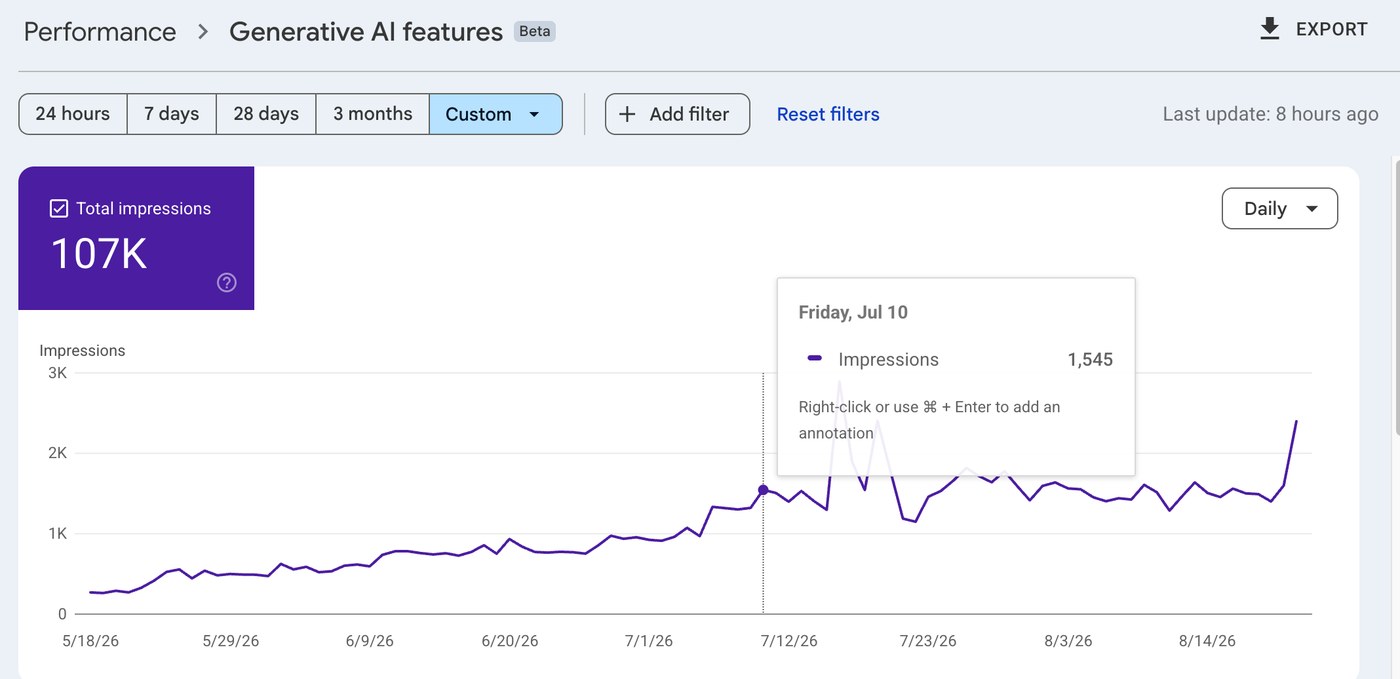
Almost ten times as many in three months, on a site with 28 pages and no advertising budget.
I'm not claiming I caused that on my own. AI answers were being surfaced more widely everywhere in that period; part of that curve would have happened without me. But the site was ready when it happened, and that was not luck:
- Clean page structure. One question per page, a clear heading hierarchy, no walls of text.
- Structured data. Schema.org markup and BreadcrumbList on every page — 39 valid items, zero errors.
- Answers that can be quoted. The answer sits in the first paragraph, not the fourth. A model looking for one sentence to cite finds it immediately.
- Technically clean. Fully HTTPS, no crawl errors, fast pages.
If you start when the wave arrives, you're late. This site did nothing extraordinary — it was simply prepared when the channel opened.
The technical floor
Technical work doesn't earn rankings. It makes sure technical work isn't the reason something fails — and that any change can be attributed to the content instead.
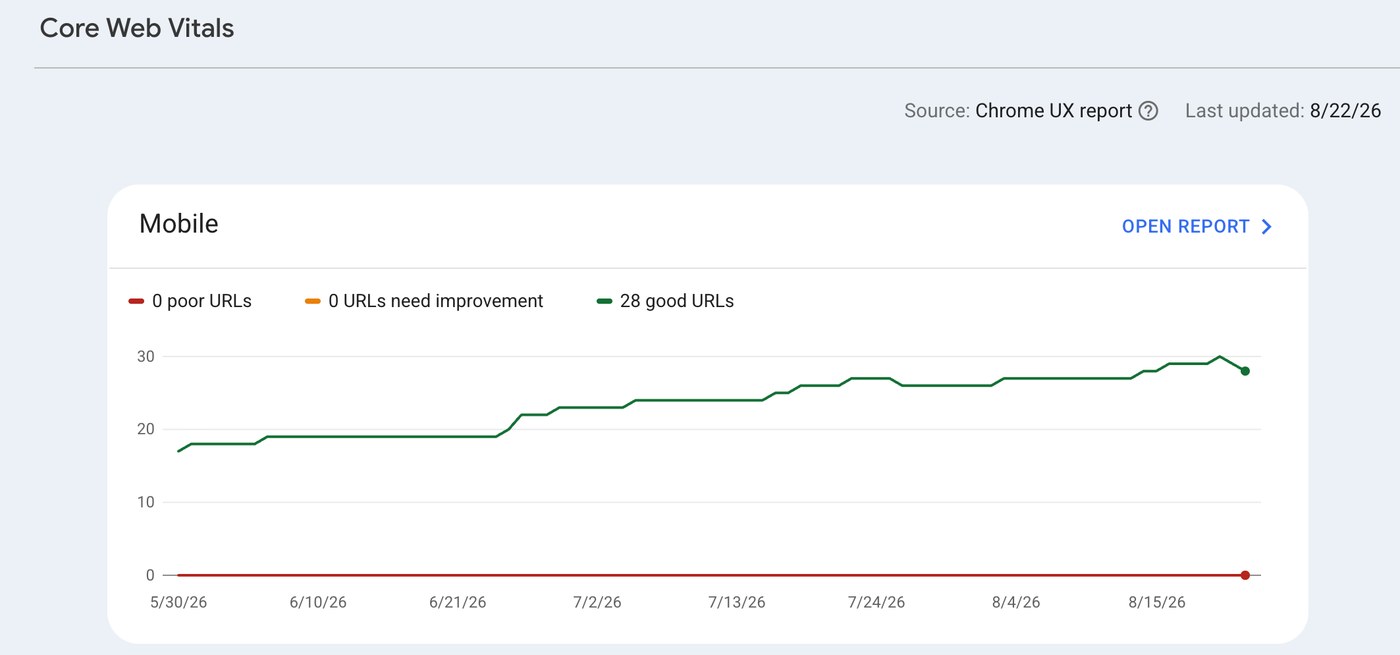
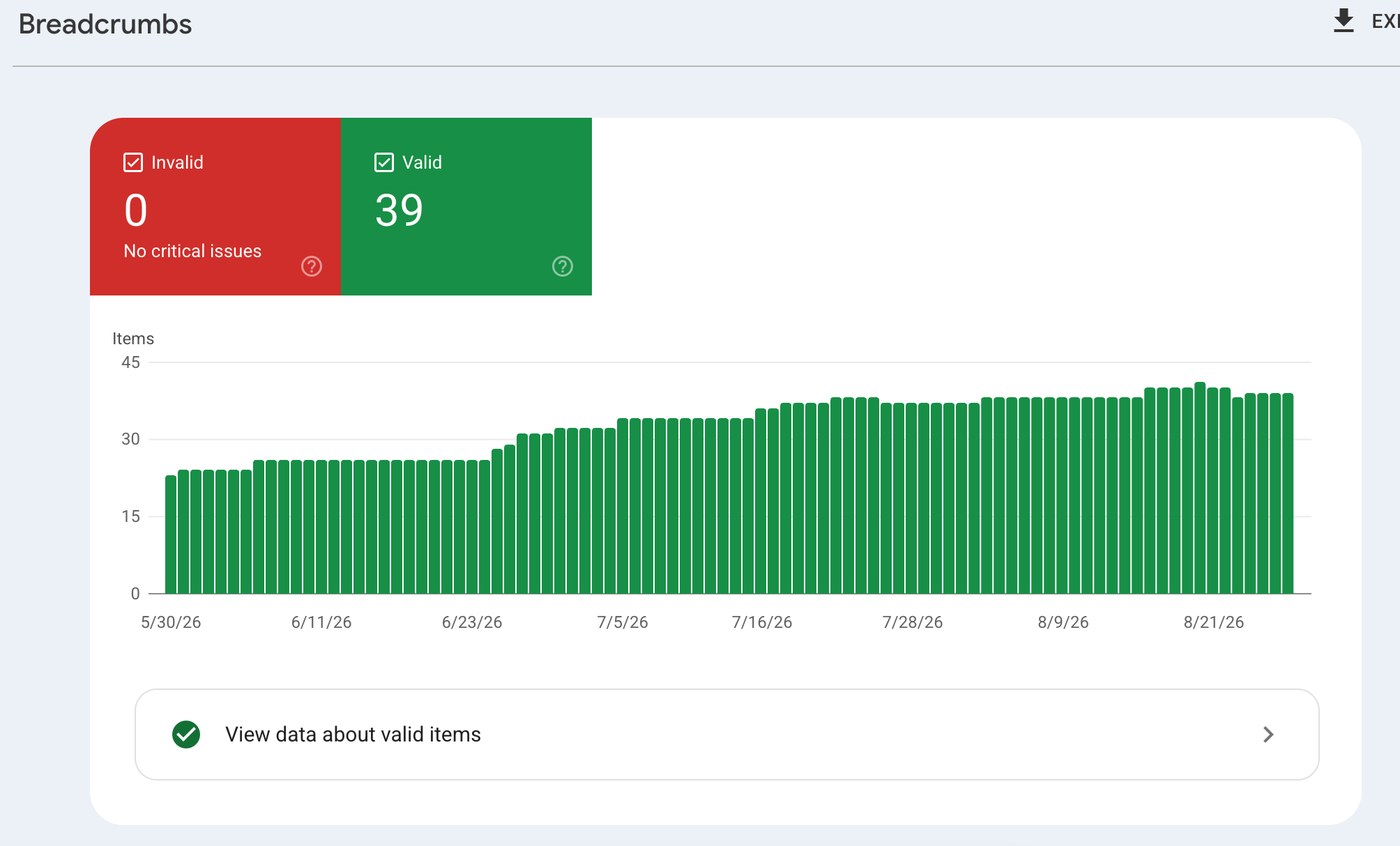
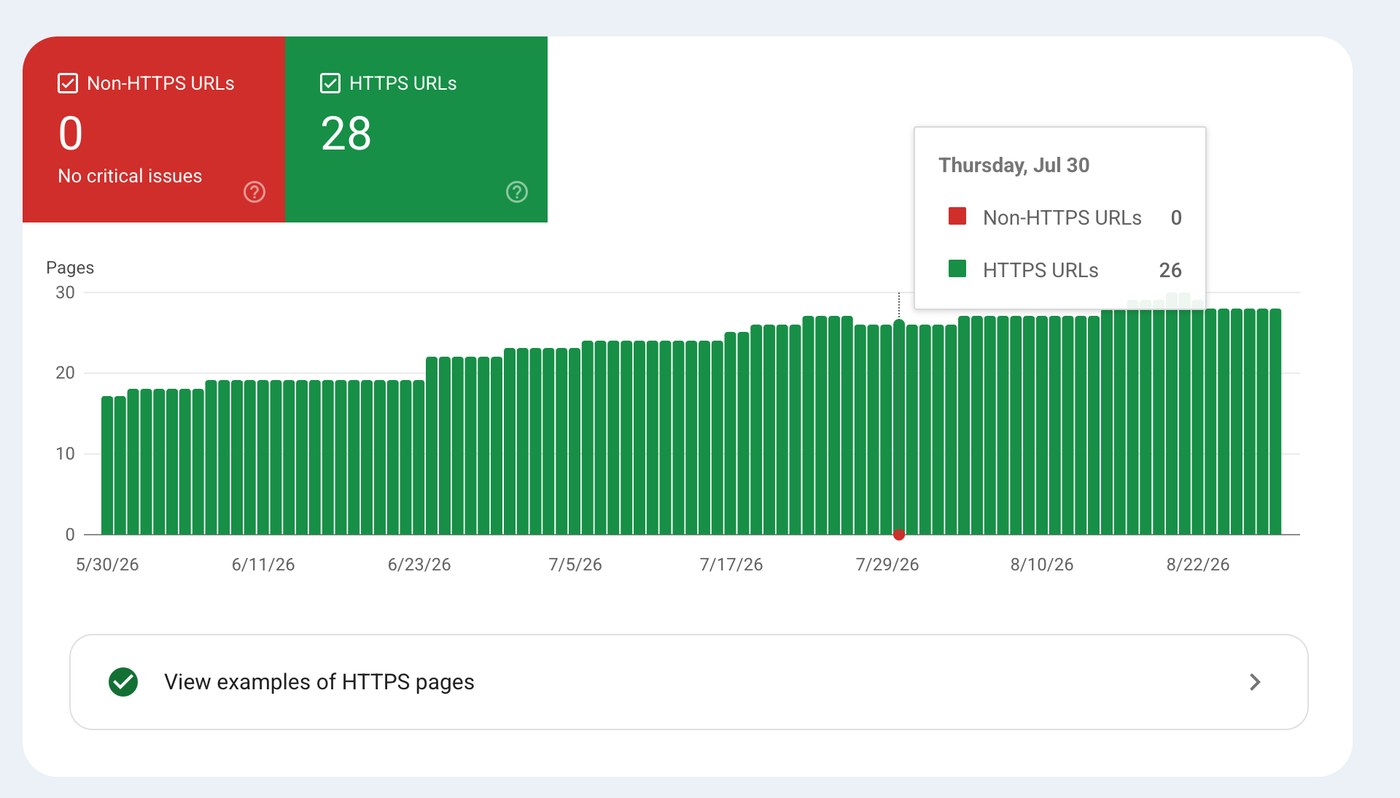
None of that is impressive. It's hygiene. But it's hygiene a surprising number of sites don't have — and without it you never know whether a change worked or whether an error simply stopped happening.
What these numbers do not prove
Any case study without this section is advertising. Here are the numbers that argue against me.
The click-through rate is 0.9%
That's low, and I'm printing it rather than leaving it out. Two reasons. Average position is 10.1 — the bottom of page one, where almost nobody clicks. And a growing share of impressions now comes from AI answers, where the question is answered outright and no click is needed. Visibility and clicks are separating. Measuring only clicks measures the wrong thing today — but showing only impressions flatters.
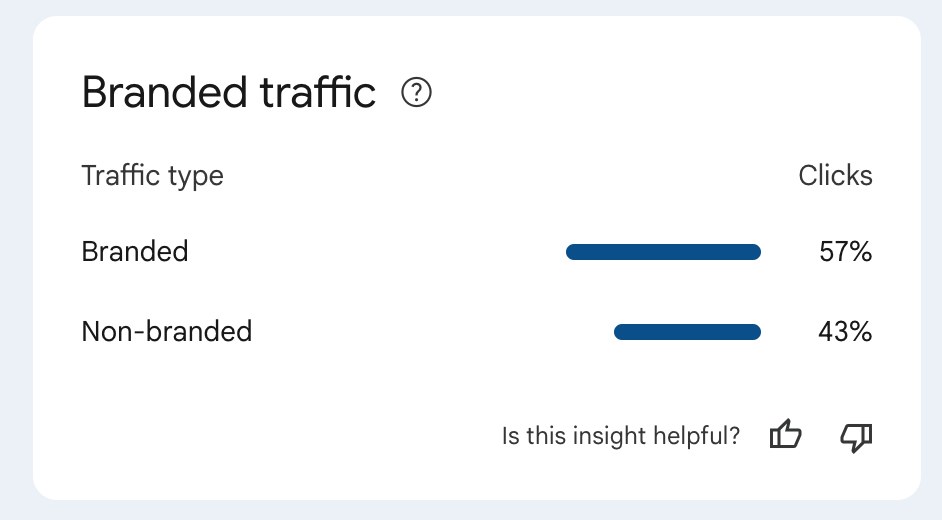
57% of clicks are branded searches
Only 43% arrive through generic queries. On a well-known subject many people search the name directly — those clicks would probably have come without my work. The honest metric for this project is the 43%, not the total.
It's a small project
28 pages. No shop, no thousand product pages, no fight with national brands over commercial terms. What worked here transfers to a local business — not, untested, to a large online store.
Part of it is simply the market
AI impressions rose everywhere between May and August, not just here. Some of that curve isn't mine. I can prove the site was prepared. I can't prove how much of the result was my work.
Seven things I learned
I knew most of this as theory beforehand. Fourteen months on a site of my own turned the theory into conviction.
1. The demand is already there — you just have to look
Search Console is free, and its queries report is a ready-made list of questions real people ask about your exact subject. That list beats any keyword tool, because it measures instead of estimating.
2. Nine months with no visible result is normal
Most projects get abandoned inside that window. Whoever stops never finds out what they were working towards.
3. Growth often comes from subtraction
The single biggest improvement in this project wasn't new text. It was merging two weak pages and rewriting a title.
4. Percentages without absolute numbers are theatre
+1,000% sounds spectacular. It was twenty clicks. If a client is only ever shown percentages, they should ask for the absolute figures.
5. Clicks are no longer the only currency
107,000 impressions inside AI answers build awareness even when nobody clicks. Measuring clicks alone means misreading the next few years.
6. Technical cleanliness isn't an advantage — it's the starting line
It earns no rankings. It makes sure nothing else is in the way, and that you know what a change was caused by.
7. Your own project is the best reference you can give yourself
Without clients I had no results to show. So I produced the results myself — on a site whose numbers belong to me and can be checked by anyone.
What I would do differently
Document earlier. For the first months I made changes without recording them. Today I can no longer say exactly which title changed when. A date beside every change costs ten seconds and is priceless later.
Delete sooner. I held on to pages that had produced nothing for months, because work had gone into them. Those pages didn't just fail to help — they took attention away from the better ones.
Take the AI reports seriously sooner. When Search Console introduced AI impressions I ignored them for a few weeks. Those weeks are missing from my data now.
Tools and methods used
About the images: all seven screenshots are original captures from this project's Google Search Console, August 2026. No figure has been altered, nothing retouched, nothing AI-generated. Two edits only: the images were resized for the web, and one screenshot had its bottom edge cropped because the domain was visible there. The two diagrams — timeline and weekly loop — are drawings, not screenshots.
Period: June 2025 to August 2026. This is a personal, non-commercial project. I don't name the site, its subject or its region here — the method is the point, not the topic. Anyone who wants to see the live numbers can have them by screen share in a conversation.
And your site?
If you have a website collecting impressions but not enquiries, the answer is almost certainly sitting in your Search Console already — nobody has read it yet. That's exactly what I do for businesses: look, clean up, and build the content people are actually asking for.